Universitas Gadjah Mada Bidang Kajian Microeconomics Dashboard
Fakultas Ekonomika dan BIsnis
Universitas Gadjah Mada
  • Beranda
  • Pos oleh
  • hal. 2
Pos oleh :

sarahgratiarabingalingging

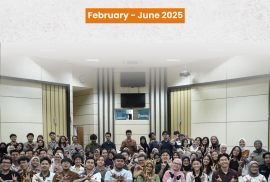
EVENT RECAP MICDASH – Februari – Juni 2025

Ekonomi PublikEkonomika KependudukanEkonomika KesehatanEkonomika KetenagakerjaanKajianMicro-Economica TalksMonthly IssuePublikasiSharing SessionsWorkshop Series Kamis, 26 Juni 2025

Microeconomics Dashboard terus berupaya menghadirkan program-program yang mendukung penguatan riset ekonomi terapan, diseminasi pengetahuan berbasis data, dan keterlibatan aktif dalam isu-isu pembangunan yang relevan.

Rangkuman kegiatan sepanjang Februari hingga Juni 2025 dapat dilihat pada slide-slide berikut sebagai dokumentasi atas berbagai inisiatif yang telah dijalankan.

Jangan lupa ikuti terus informasi terbaru mengenai kegiatan, publikasi, dan agenda kolaboratif kami lainnya melalui akun Instagram @microdashboard. read more
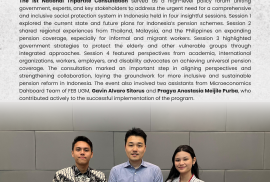
EVENT RECAP – Participation Of The Microeconomics Dashboard Team

PublikasiUncategorized Sabtu, 21 Juni 2025

On May 7th, 2025, the Microeconomics Dashboard Team of FEB UGM participated in the 1st National Tripartite Consultation held in South Jakarta. This high-level policy forum brought together government institutions, employers, workers, academics, and international organizations to address the urgent need for a more comprehensive and inclusive social protection system in Indonesia.

The consultation was structured into four sessions that discussed: the current state and future plans for Indonesia’s pension schemes, regional experiences from Thailand, Malaysia, and the Philippines, government strategies to protect elderly and vulnerable populations, expert perspectives from academia, workers, employers, and disability advocates read more

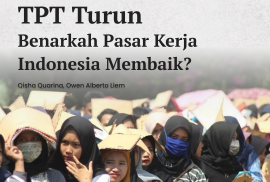
Isu Bulanan Bagian 3: Memahami Angka TPT Turun, Benarkah Pasar Kerja Indonesia Membaik?

Ekonomi PublikEkonomika KependudukanEkonomika KetenagakerjaanMonthly Issue Sabtu, 14 Juni 2025

Penulis: Qisha Quarina, Owen Alberto Liem

Juni 2025

Angka pengangguran terbuka (TPT) Indonesia turun ke 4,76% pada Februari 2025 terendah dalam beberapa tahun terakhir. Sekilas, ini tampak sebagai sinyal membaiknya pasar kerja. Namun jika ditelaah lebih dalam, jumlah penganggur justru meningkat, dan sebagian besar pekerjaan baru yang tercipta adalah pekerjaan informal yang rentan tanpa perlindungan sosial.

Analisis terbaru kami menunjukkan bahwa 59,4% pekerja Indonesia masih bekerja secara informal, tanpa kontrak kerja formal atau jaminan hukum. Bahkan di kalangan pekerja formal, mayoritas bekerja dengan sistem kontrak jangka pendek (PKWT) yang tidak menjamin keberlanjutan pekerjaan atau akses penuh terhadap jaminan sosial. Cakupan jaminan sosial pun masih sangat rendah, khususnya bagi pekerja informal dan pekerja tanpa perjanjian kerja. read more

EVENT RECAP – Workshop Policy Paper #1

Ekonomi PublikEkonomika KependudukanEkonomika KesehatanEkonomika KetenagakerjaanEkonomika PendidikanWorkshop Series Rabu, 14 Mei 2025

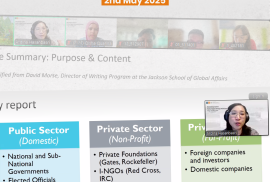
On May 2nd, 2025, we successfully held the first session of our Policy Paper Writing Workshop series, led by Ardina Hasanbasri. The workshop focused on the key aspects of crafting effective policy reports, emphasizing the importance of structuring reports that are clear, concise, and accessible to diverse audiences, including both the public and private sectors.

Participants were also introduced to the essential components of a well-crafted executive summary—one that presents the main recommendations in a direct and actionable manner. We would like to thank all the participants for their valuable contributions and engagement. We look forward to continuing this journey in future sessions. read more

EVENT RECAP – Micro-Economica Talks (MET) #1

Ekonomi PublikEkonomika AgrikulturEkonomika KependudukanEkonomika KesehatanEkonomika KetenagakerjaanEkonomika PendidikanMicro-Economica Talks Selasa, 13 Mei 2025

[EVENT RECAP – MET Series #1]
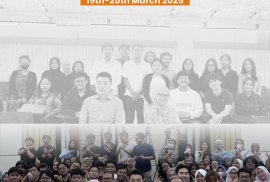
The Center for Microeconomics Research and Dashboard successfully launched the first session of the Micro-Economica Talks (MET) Series, carrying the theme: “Just Transition & Climate Change: The Role of Social Protection and Impacts on Workers.”

Held over two insightful days: Wednesday, 19 March 2025 and Thursday, 20 March 2025. This event brought together students, researchers, and practitioners to critically explore the intersection of energy transition, climate policy, and social protection. read more

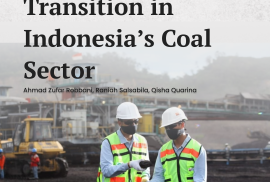
Monthly Issue Vol.2: Just Energy Transition in Indonesia’s Coal Sector

Ekonomi PublikEkonomika KependudukanEkonomika KetenagakerjaanEkonomika TeknologiKajianMonthly Issue Kamis, 8 Mei 2025

Author: Ahmad Zufar Robbani, Raniah Salsabila, Qisha Quarina

May 2025

Indonesia’s commitment to achieving net-zero emissions by 2060 or earlier places the coal sector at the heart of the nation’s energy transition. As one of the main contributors to national GDP, state revenue, and employment, phasing out coal is not just an environmental milestone—it’s a socioeconomic turning point. Our latest study reveals that while most coal workers belong to the highest wage deciles, many are still vulnerable due to fixed-term contracts that limit access to social protection. The transition is projected to cause widespread job losses across upstream and downstream industries, with regions like East Kalimantan and South Sumatra likely to face the greatest impact. read more

Rilis Booklet BISSA

Ekonomi PublikEkonomika KependudukanEkonomika KesehatanPublikasi Rabu, 30 April 2025

As a result of collaboration between Microeconomics Dashboard and Spatial Research in Regional & Sustainable Economics (Sparse) Working Group under the Faculty of Economics and Business UGM, BISSA! published a booklet entitled “Mengelola Sampah dengan Baik untuk Menciptakan Lingkungan yang Berkelanjutan”.

Our booklet is now officially copyrighted and available for access on the Microeconomics Dashboard website!

This booklet was proudly created by the Community Service Team BISSA!, focusing on sustainable waste management practices in general. Through this initiative, we aim to raise awareness and encourage better waste practices that benefit both the community and the environment. read more

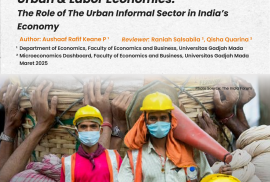
Special Edition Policy Paper Development Economics Class: Urban & Labor Economics: The Role of The Urban Informal Sector in India’s Economy

Ekonomi PublikEkonomika KetenagakerjaanKajian Senin, 10 Maret 2025

Author: Aushaaf Rafif Keane Pribadi (1)
Reviewer: Raniah Salsabila (2), Qisha Quarina (2)

Maret 2025

Highlights:

  • Informal sectors, specifically urban informal sector, play significant roles in the economy and employment of the people in India. 
  • The dominance of the urban informal sector in India is mainly caused by urbanization coupled with premature deindustrialization. 
  • The urban informal sector has a significant role in income generation and unemployment reduction, leading to increased livelihood for the poor. On the other side, the urban informal sector faces challenges, such as low access to credit, production technologies, formal training, and public services. 
  • However, the existence of the urban informal sector still sparks debate on whether it is desired in the economy. The urban informal sector is typically characterized by low productivity, but its vital role as the livelihood of the urban poor and its potential resilience to shocks may benefit India’s current economic condition if treated accordingly. 
  • It is acknowledged that the development of the urban formal sector can stabilize the urban informal sector through balanced transitions and increased productivity from the spillover effects.
  • However, comprehensive policies targeted specifically to the urban informal sector are needed, including facilitation of capacity building, inclusive credit access, accommodative business insurance, and formalization mechanism that is adapted to specific informal sector types. 
  • read more

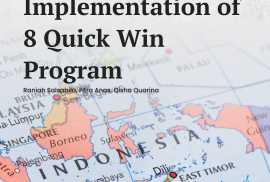
    Monthly Issue Vol.1: The Implementation of 8 Quick Win Programs

    Ekonomi PublikEkonomika AgrikulturEkonomika KependudukanEkonomika KesehatanEkonomika KetenagakerjaanEkonomika PendidikanEkonomika TeknologiMonthly IssuePublikasi Jumat, 7 Maret 2025

    Author: Raniah Salsabila, Fitra Anas, Qisha Quarina

    Maret 2025

    Indonesia is pushing forward with its bold 8 Quick Win Programs, aimed at transforming public welfare through critical initiatives like Free Nutritious Meals (MBG), Free Health Check-ups, and Agricultural Land Productivity Enhancement. These programs target malnutrition, healthcare accessibility, and food security, focusing on empowering vulnerable communities across the nation.

    How can these initiatives reshape Indonesia’s future by tackling poverty, stunting, and inequality? Dive into the full report to understand how strategic investments in health, education, and agriculture are driving a more resilient and sustainable Indonesia. read more

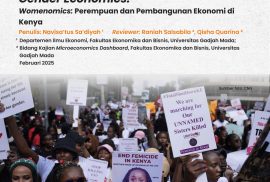
    Edisi Khusus Policy Paper Kelas Ekonomika Pembangunan 1 Program Sarjana Gender Economics: Womenomics: Perempuan dan Pembangunan Ekonomi di Kenya

    Ekonomika KependudukanEkonomika KetenagakerjaanKajian Kamis, 27 Februari 2025

    Penulis: Navisa’tus Sa’diyah (1)
    Reviewer: Raniah Salsabila (2), Qisha Quarina (2)

    (1) Departemen Ilmu Ekonomi, Fakultas Ekonomika dan Bisnis, Universitas Gadjah Mada;
    (2) Bidang Kajian Microeconomics Dashboard, Fakultas Ekonomika dan Bisnis, Universitas Gadjah Mada

    Februari 2025

    Highlights:

    Pembangunan ekonomi saat ini tidak hanya sebagai usaha untuk meningkatkan pendapatan per kapita, namun juga melibatkan berbagai perubahan struktur sosial, seperti percepatan pertumbuhan, pengurangan ketimpangan, dan penanggulangan kemiskinan, sehingga disebut proses multidimensi. Adapun salah satu tantangan proses multidimensi yaitu ketimpangan gender yang menjadi penghambat utama pertumbuhan ekonomi di banyak negara berkembang, termasuk Kenya.  Perempuan di Kenya telah lama mengalami marginalisasi dan diskriminasi dalam masyarakat patriarki sehingga lebih cenderung berada dalam kemiskinan yang kemudian secara agregat diikuti penurunan Produk Domestik Bruto (PDB) per kapita, peningkatan angka kemiskinan, penurunan harapan hidup, serta ketimpangan kesempatan dan akses terhadap sumber daya (seperti pendidikan dan pekerjaan).  Sektor agrikultur menjadi tulang punggung perekonomian Kenya dengan komoditas utamanya adalah tebu dan kopi. Maka dari itu, perempuan di Kenya memiliki peran yang krusial namun banyak diantara pekerjaan yang dilakukan perempuan “tidak kasat mata” dan tidak dihargai secara ekonomi, seperti pekerjaan mengurus tanaman pangan, mengurus konsumsi keluarga, dan memasak.  Selain itu, partisipasi pekerja perempuan di sektor pertanian di Kenya memiliki kecenderungan menurun yang disebabkan oleh multifaktor sosial dan ekonomi, seperti upah yang lebih rendah daripada laki-laki untuk pekerjaan yang sama. Pada dasarnya, perempuan memiliki peran penting dalam pembangunan. Serta “

    Womenomics” read more

    123

    Berita Terakhir

    • Kajian Vol.14: Agricultural Economics: The Moderation of Indonesia’s Agricultural Sector: Why Productivity and Growth Are Slowing Down?
    • Kajian Vol.13: Health Economics: Mengapa Gangguan Tidur Menjadi Masalah Baru dalam Ekonomi? Sleep Deficiency and Its Economic Burden
    • Kajian Vol.12: Labour Economics: Indonesia’s Young Labour Force: Trends and Challenges in Youth Unemployment
    • Edisi Khusus Policy Paper Kelas Ekonomika Pembangunan 1 Program Sarjana Population Economics: Analisis Efektivitas Kebijakan Insentif Kelahiran di Tengah Krisis Populasi Korea Selatan
    • Kajian Vol.11: Sports Economics: Exploring the Football Player Market in Indonesia’s Super League
    Universitas Gadjah Mada

    Bidang Kajian Microeconomics Dashboard
    Fakultas Ekonomika dan Bisnis
    Universitas Gadjah Mada
    Jln. Sosio Humaniora No.1, Bulaksumur, Yogyakarta, Indonesia 55281
    Phone: 081227556133 – Vika
    Email: microeconomics.feb@ugm.ac.id

    © Bidang Kajian Microeconomics Dashboard

    KEBIJAKAN PRIVASI/PRIVACY POLICY