Universitas Gadjah Mada Bidang Kajian Microeconomics Dashboard
Fakultas Ekonomika dan BIsnis
Universitas Gadjah Mada
  • Beranda
  • Kajian
Arsip:

Kajian

Kajian Vol.14: Agricultural Economics: The Moderation of Indonesia’s Agricultural Sector: Why Productivity and Growth Are Slowing Down?

Ekonomi PublikEkonomika AgrikulturEkonomika KependudukanEkonomika KetenagakerjaanEkonomika TeknologiKajian Jumat, 2 Januari 2026

Authors:

Nawfal  Aulia Luthfurrahman, Ahmad Zufar Robbani, Qisha Quarina

Bidang Kajian Microeconomics Dashboard 2025

Executive Summary

  • The agricultural sector in Indonesia remains a vital source of employment and food security but is growing to be typified by stagnation in productivity. Despite the improvement in agricultural value added per worker over time, the growth has been low and has been persistently lower than industry and services.
  • One major factor behind this stagnation is the aging structure of the agricultural workforce. A growing share of agricultural workers is above prime working age, while younger generations are steadily leaving the sector. This demographic shift limits labor productivity and slows the adoption of modern technologies and practices.
  • Land fragmentation and insecure tenure represent another critical bottleneck. Most agricultural holdings operate on small and fragmented plots, often without formal land ownership. These conditions increase production costs, reduce scale efficiency, restrict access to credit, and discourage long-term investment in productivity-enhancing inputs.
  • There is still a significant share of agricultural holdings who are still in subsistence and semi-subsistence farming where farmers produce goods that are mostly consumed in the family or they are not sold in the market. The low productivity and land underutilization is reinforced by this type of production, which restricts income production, capital accumulation, and reinvestment.
  • Despite policy efforts to expand access to fertilizers, irrigation, and digital technologies, technology adoption remains uneven. The small area of irrigation covered, the lack of uniformity in the use of inputs, and partial diffusion of modern tools are the reasons why the overall agricultural sector of Indonesia is not changing and slow down the process of agricultural transformation.
  • read more

    Kajian Vol.13: Health Economics: Mengapa Gangguan Tidur Menjadi Masalah Baru dalam Ekonomi? Sleep Deficiency and Its Economic Burden

    Ekonomi PublikEkonomika KependudukanEkonomika KesehatanEkonomika KetenagakerjaanEkonomika PendidikanKajianPublikasi Senin, 29 Desember 2025

    Penulis:

    Rani Destia Wahyuningsih, Ahmad Zufar Robbani, Qisha Quarina

    Bidang Kajian Microeconomics Dashboard 2025

    Ringkasan Eksekutif

  • Defisiensi tidur (sleep deficiency) merupakan kondisi ketika individu tidak memperoleh durasi dan/atau kualitas tidur yang memadai, termasuk tidur yang tidak selaras dengan ritme biologis, kualitas tidur yang buruk, serta adanya gangguan tidur.
  • Meskipun sering tidak disadari dan jarang dilaporkan, sleep deficiency telah berkembang menjadi isu kesehatan global dengan implikasi ekonomi yang luas, terutama melalui penurunan produktivitas tenaga kerja dan hilangnya jam kerja.
  • Faktor individu, termasuk rendahnya aktivitas fisik, status gizi overweight atau obesitas, serta kebiasaan merokok, bersama dengan kondisi kesehatan mental, merupakan determinan penting dalam terjadinya sleep deficiency. Selain itu, faktor struktural seperti durasi perjalanan kerja (commuting time) yang panjang turut berkontribusi terhadap berkurangnya waktu tidur.
  • Prevalensi sleep deficiency secara global menunjukkan adanya pola ketimpangan sosial-ekonomi. Kelompok dengan tingkat pendidikan lebih rendah dan individu yang berstatus menganggur cenderung memiliki kualitas tidur yang lebih buruk dibandingkan kelompok lainnya.
  • Secara lintas negara, hanya sekitar separuh orang dewasa dunia yang melaporkan memperoleh tidur yang cukup, dengan Jepang dan Korea Selatan menempati posisi terbawah dalam persentase penduduk yang mendapatkan tidur cukup.
  • Di Indonesia, sleep deficiency menunjukkan bahwa meskipun mayoritas masyarakat menilai kualitas tidurnya berada pada kategori “cukup”. Lebih dari 25 persen individu mengalami kesulitan tidur lebih dari tiga kali dalam seminggu, mengindikasikan adanya masalah tidur yang bersifat berulang.
  • Pengukuran economic costs di negara maju oleh Hafner et al. (2017) melalui pendekatan mikro menilai kerugian produktivitas akibat absenteeism dan presenteeism, dan menemukan adanya hubungan berbentuk U-shaped relationship antara durasi tidur dan produktivitas kerja.
  • Hafner et al. (2017) melalui pendekatan makro menggunakan model keseimbangan umum dinamis berbasis Overlapping Generations (OLG) menemukan bahwa setiap skenario perbaikan durasi tidur secara konsisten meningkatkan produk domestik bruto (PDB).
  • read more

    Kajian Vol.12: Labour Economics: Indonesia’s Young Labour Force: Trends and Challenges in Youth Unemployment

    Ekonomi PublikEkonomika KependudukanEkonomika KetenagakerjaanKajianPublikasi Sabtu, 27 Desember 2025

    Authors:

    Nadya Zahra Prasetio, Nawfal Aulia, Qisha Quarina, Ahmad Zufar Robbani

    Bidang Kajian Microeconomics Dashboard 2025

    Executive Summary

  • In Indonesia, unemployment in recent years has been the highest within youths against other working age groups, recorded persistently between 23% – 16% within the last decade.
  • Amongst the unemployed youth, male have been persistently recording the highest unemployment rate, despite traditional viewpoints on being the breadwinner of the family.
  • In recent years, senior high school and vocational school graduates continue to dominate amongst the unemployed youth, showing how despite relatively high levels of education, they still remain unable to be absorbed in the market
  • The consistent unemployment rate may also be due to the lack of training and working experiences of the young workers, which acts as a barrier to them. 
  • Therefore, this study will identify the reasons behind the persistence of youth unemployment in the Indonesian labour market.
  • read more

    Kajian Vol.11: Sports Economics: Exploring the Football Player Market in Indonesia’s Super League

    Ekonomi PublikEkonomika KeolahragaanEkonomika KetenagakerjaanKajianPublikasi Jumat, 5 Desember 2025

    Authors:

    Jeremy Nathanael Zefanya, Ahmad Zufar Robbani, Qisha Quarina

    Bidang Kajian Microeconomics Dashboard 2025

    Executive Summary

  • Indonesia’s Super League has experienced growth, marked by rising fan engagement, increasing club valuations, and expanding recruitment of foreign players. The league operates within a hierarchical football structure that mirrors global labour market patterns, where economic inequality, segmented mobility, and regulatory constraints shape player careers and club strategies.
  • This study aims to analyze the economic dynamics of the Indonesian Super League by examining league hierarchy status, regulatory frameworks, and the determinants of  market value. It also seeks to contextualize Indonesia’s football labour market within global patterns of player migration and performance-based valuation.
  • The analysis reveals a clear financial hierarchy between Super League and Liga 2, with Liga 1 clubs holding significantly larger valuations and stronger institutional capacity. Short-term PKWT contracts expose players to wage risks, making legal protections under Indonesia’s Manpower Law and National Sports System Law crucial for safeguarding workers’ rights. 
  • Player market value is primarily influenced by performance metrics such as goals and assists, as well as human capital factors including age and position. Younger players and high-performing foreign players, command higher valuations, while age and disciplinary records reduce market value
  • Indonesia’s Super League presents a high-opportunity for economic analysis, shaped by financial disparities, uneven contract enforcement, and structural segmentation that influence player valuation and mobility. These conditions highlight the need for further research on wage determination, institutional quality, and how governance and investment patterns shape the broader football labour market
  • read more

    Kajian Vol.10: Labour Economics – The Vulnerability of Fixed-Term Contract Workers in Indonesia

    Ekonomi PublikEkonomika KependudukanEkonomika KetenagakerjaanKajianPenelitian Senin, 27 Oktober 2025

    Authors:

    Raniah Salsabila, Owen Alberto Liem, Nadya Zahra Prasetio, Nawfal Aulia, Qisha Quarina

    Bidang Kajian Microeconomics Dashboard 2025


    Executive Summary

  • In Indonesia, work agreements are divided into 2 (two), i.e. fixed-term contract (Perjanjian Kerja Waktu Tertentu/PKWT) and indefinite-term contract (Perjanjian Kerja Waktu Tidak Tertentu/PKWTT).
  • The implementing regulations for work agreements are contained in the Law No. 13/2003 on Employment, which was later amended through Law No. 11/2020 on Job Creation or the Omnibus Law, and Government Regulation No. 35/2021.
  • There are differences between the two work agreements, i.e. the length of service, nature of work, employment rights, and employment protection for workers.
  • Despite being eligible to the same social protection programs, fixed-term contract workers are prone to risks due to the limited nature of the work agreement, lack of labour regulations, restricted social program coverage, and susceptibility to income exploitation.
  • Specifically, only a small portion of PKWT workers are covered by employment insurance programs despite being eligible for the programs, indicating the mismatch between regulations and company policies.
  • Demographically, PKWT workers tend to be younger and less educated than the PKWTT workers.
  • The number of workers experiencing termination of employment has increased from year to year with PKWT workers being more vulnerable to termination of employment.
  • In addition, compared to the PKWTT workers, the PKWT workers have a higher percentage of no engagement in the labour union, implying that PKWT workers have a lower incidence of social dialogue in the labour market.
  • Lastly, most PKWT workers lie within the lower income deciles (within the 1st-5th decile), placing them in a financially vulnerable segment of society.
  • read more

    Edisi Khusus Policy Paper Kelas Ekonomika Pembangunan 1 Program Sarjana Population Economics: Efektivitas Kebijakan Kependudukan: Perbandingan Kebijakan Pro-Natalitas di Singapura dan Program Keluarga Berencana di Indonesia

    Ekonomi PublikEkonomika KependudukanEkonomika KesehatanEkonomika PendidikanEkonomika PernikahanKajian Minggu, 28 September 2025

    Penulis: Nadja Madamungga (1)
    Reviewer: Jamilatuzzahro, Qisha Quarina (2), Nawfal Aulia L

    (1) Departemen Ilmu Ekonomi, Fakultas Ekonomika dan Bisnis, Universitas Gadjah Mada;
    (2) Bidang Kajian Microeconomics Dashboard, Fakultas Ekonomika dan Bisnis, Universitas Gadjah Mada

    September 2025

    Highlights:

  • Kajian ini bertujuan menganalisis penyebab rendahnya angka kelahiran dan tingkat fertilitas total (TFR) di Singapura serta mengevaluasi efektivitas kebijakan pro-natalitas yang diterapkan. Selain itu, kajian ini membandingkan kebijakan tersebut dengan program Keluarga Berencana (KB) di Indonesia.
  • Singapura menghadapi penurunan TFR yang signifikan, mencapai angka terendah sepanjang sejarah pada tahun 2023, yaitu 0,97 (Singapore Department of Statistics, 2023). Kondisi ini menimbulkan tantangan serius terhadap regenerasi populasi meskipun telah diberlakukan berbagai insentif pro-natalitas.
  • Sebaliknya, Indonesia masih berfokus pada pengendalian angka kelahiran melalui program KB yang mengutamakan penggunaan alat kontrasepsi untuk menunda kehamilan. Pemerintah Indonesia berupaya menjaga efektivitas program ini di tengah dinamika sosial dan ekonomi yang terus berubah.
  • Regenerasi populasi menjadi variabel penting dalam menghadapi tantangan demografis, baik bagi Singapura yang berusaha meningkatkan angka kelahiran, maupun bagi Indonesia yang menyeimbangkan pertumbuhan penduduk dengan pembangunan berkelanjutan.
  • read more

    EVENT RECAP MICDASH – Februari – Juni 2025

    Ekonomi PublikEkonomika KependudukanEkonomika KesehatanEkonomika KetenagakerjaanKajianMicro-Economica TalksMonthly IssuePublikasiSharing SessionsWorkshop Series Kamis, 26 Juni 2025

    Microeconomics Dashboard terus berupaya menghadirkan program-program yang mendukung penguatan riset ekonomi terapan, diseminasi pengetahuan berbasis data, dan keterlibatan aktif dalam isu-isu pembangunan yang relevan.

    Rangkuman kegiatan sepanjang Februari hingga Juni 2025 dapat dilihat pada slide-slide berikut sebagai dokumentasi atas berbagai inisiatif yang telah dijalankan.

    Jangan lupa ikuti terus informasi terbaru mengenai kegiatan, publikasi, dan agenda kolaboratif kami lainnya melalui akun Instagram @microdashboard. read more
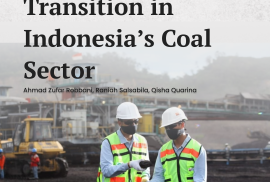
    Monthly Issue Vol.2: Just Energy Transition in Indonesia’s Coal Sector

    Ekonomi PublikEkonomika KependudukanEkonomika KetenagakerjaanEkonomika TeknologiKajianMonthly Issue Kamis, 8 Mei 2025

    Author: Ahmad Zufar Robbani, Raniah Salsabila, Qisha Quarina

    May 2025

    Indonesia’s commitment to achieving net-zero emissions by 2060 or earlier places the coal sector at the heart of the nation’s energy transition. As one of the main contributors to national GDP, state revenue, and employment, phasing out coal is not just an environmental milestone—it’s a socioeconomic turning point. Our latest study reveals that while most coal workers belong to the highest wage deciles, many are still vulnerable due to fixed-term contracts that limit access to social protection. The transition is projected to cause widespread job losses across upstream and downstream industries, with regions like East Kalimantan and South Sumatra likely to face the greatest impact. read more

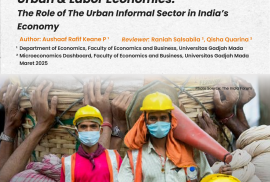
    Special Edition Policy Paper Development Economics Class: Urban & Labor Economics: The Role of The Urban Informal Sector in India’s Economy

    Ekonomi PublikEkonomika KetenagakerjaanKajian Senin, 10 Maret 2025

    Author: Aushaaf Rafif Keane Pribadi (1)
    Reviewer: Raniah Salsabila (2), Qisha Quarina (2)

    Maret 2025

    Highlights:

  • Informal sectors, specifically urban informal sector, play significant roles in the economy and employment of the people in India. 
  • The dominance of the urban informal sector in India is mainly caused by urbanization coupled with premature deindustrialization. 
  • The urban informal sector has a significant role in income generation and unemployment reduction, leading to increased livelihood for the poor. On the other side, the urban informal sector faces challenges, such as low access to credit, production technologies, formal training, and public services. 
  • However, the existence of the urban informal sector still sparks debate on whether it is desired in the economy. The urban informal sector is typically characterized by low productivity, but its vital role as the livelihood of the urban poor and its potential resilience to shocks may benefit India’s current economic condition if treated accordingly. 
  • It is acknowledged that the development of the urban formal sector can stabilize the urban informal sector through balanced transitions and increased productivity from the spillover effects.
  • However, comprehensive policies targeted specifically to the urban informal sector are needed, including facilitation of capacity building, inclusive credit access, accommodative business insurance, and formalization mechanism that is adapted to specific informal sector types. 
  • read more

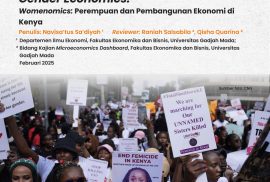
    Edisi Khusus Policy Paper Kelas Ekonomika Pembangunan 1 Program Sarjana Gender Economics: Womenomics: Perempuan dan Pembangunan Ekonomi di Kenya

    Ekonomika KependudukanEkonomika KetenagakerjaanKajian Kamis, 27 Februari 2025

    Penulis: Navisa’tus Sa’diyah (1)
    Reviewer: Raniah Salsabila (2), Qisha Quarina (2)

    (1) Departemen Ilmu Ekonomi, Fakultas Ekonomika dan Bisnis, Universitas Gadjah Mada;
    (2) Bidang Kajian Microeconomics Dashboard, Fakultas Ekonomika dan Bisnis, Universitas Gadjah Mada

    Februari 2025

    Highlights:

    Pembangunan ekonomi saat ini tidak hanya sebagai usaha untuk meningkatkan pendapatan per kapita, namun juga melibatkan berbagai perubahan struktur sosial, seperti percepatan pertumbuhan, pengurangan ketimpangan, dan penanggulangan kemiskinan, sehingga disebut proses multidimensi. Adapun salah satu tantangan proses multidimensi yaitu ketimpangan gender yang menjadi penghambat utama pertumbuhan ekonomi di banyak negara berkembang, termasuk Kenya.  Perempuan di Kenya telah lama mengalami marginalisasi dan diskriminasi dalam masyarakat patriarki sehingga lebih cenderung berada dalam kemiskinan yang kemudian secara agregat diikuti penurunan Produk Domestik Bruto (PDB) per kapita, peningkatan angka kemiskinan, penurunan harapan hidup, serta ketimpangan kesempatan dan akses terhadap sumber daya (seperti pendidikan dan pekerjaan).  Sektor agrikultur menjadi tulang punggung perekonomian Kenya dengan komoditas utamanya adalah tebu dan kopi. Maka dari itu, perempuan di Kenya memiliki peran yang krusial namun banyak diantara pekerjaan yang dilakukan perempuan “tidak kasat mata” dan tidak dihargai secara ekonomi, seperti pekerjaan mengurus tanaman pangan, mengurus konsumsi keluarga, dan memasak.  Selain itu, partisipasi pekerja perempuan di sektor pertanian di Kenya memiliki kecenderungan menurun yang disebabkan oleh multifaktor sosial dan ekonomi, seperti upah yang lebih rendah daripada laki-laki untuk pekerjaan yang sama. Pada dasarnya, perempuan memiliki peran penting dalam pembangunan. Serta “

    Womenomics” read more

    123

    Berita Terakhir

    • Kajian Vol.14: Agricultural Economics: The Moderation of Indonesia’s Agricultural Sector: Why Productivity and Growth Are Slowing Down?
    • Kajian Vol.13: Health Economics: Mengapa Gangguan Tidur Menjadi Masalah Baru dalam Ekonomi? Sleep Deficiency and Its Economic Burden
    • Kajian Vol.12: Labour Economics: Indonesia’s Young Labour Force: Trends and Challenges in Youth Unemployment
    • Edisi Khusus Policy Paper Kelas Ekonomika Pembangunan 1 Program Sarjana Population Economics: Analisis Efektivitas Kebijakan Insentif Kelahiran di Tengah Krisis Populasi Korea Selatan
    • Kajian Vol.11: Sports Economics: Exploring the Football Player Market in Indonesia’s Super League
    Universitas Gadjah Mada

    Bidang Kajian Microeconomics Dashboard
    Fakultas Ekonomika dan Bisnis
    Universitas Gadjah Mada
    Jln. Sosio Humaniora No.1, Bulaksumur, Yogyakarta, Indonesia 55281
    Phone: 081227556133 – Vika
    Email: microeconomics.feb@ugm.ac.id

    © Bidang Kajian Microeconomics Dashboard

    KEBIJAKAN PRIVASI/PRIVACY POLICY