Universitas Gadjah Mada Bidang Kajian Microeconomics Dashboard
Fakultas Ekonomika dan BIsnis
Universitas Gadjah Mada
  • Beranda
  • SDG 9: Industri Inovasi dan Infrastruktur
  • SDG 9: Industri Inovasi dan Infrastruktur
Arsip:

SDG 9: Industri Inovasi dan Infrastruktur

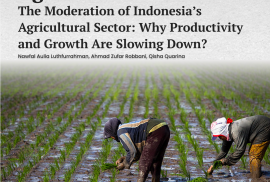
Kajian Vol.14: Agricultural Economics: The Moderation of Indonesia’s Agricultural Sector: Why Productivity and Growth Are Slowing Down?

Ekonomi PublikEkonomika AgrikulturEkonomika KependudukanEkonomika KetenagakerjaanEkonomika TeknologiKajian Jumat, 2 Januari 2026

Authors:

Nawfal  Aulia Luthfurrahman, Ahmad Zufar Robbani, Qisha Quarina

Bidang Kajian Microeconomics Dashboard 2025

Executive Summary
  • The agricultural sector in Indonesia remains a vital source of employment and food security but is growing to be typified by stagnation in productivity. Despite the improvement in agricultural value added per worker over time, the growth has been low and has been persistently lower than industry and services.
  • One major factor behind this stagnation is the aging structure of the agricultural workforce. A growing share of agricultural workers is above prime working age, while younger generations are steadily leaving the sector. This demographic shift limits labor productivity and slows the adoption of modern technologies and practices.
  • Land fragmentation and insecure tenure represent another critical bottleneck. Most agricultural holdings operate on small and fragmented plots, often without formal land ownership. These conditions increase production costs, reduce scale efficiency, restrict access to credit, and discourage long-term investment in productivity-enhancing inputs.
  • There is still a significant share of agricultural holdings who are still in subsistence and semi-subsistence farming where farmers produce goods that are mostly consumed in the family or they are not sold in the market. The low productivity and land underutilization is reinforced by this type of production, which restricts income production, capital accumulation, and reinvestment.
  • Despite policy efforts to expand access to fertilizers, irrigation, and digital technologies, technology adoption remains uneven. The small area of irrigation covered, the lack of uniformity in the use of inputs, and partial diffusion of modern tools are the reasons why the overall agricultural sector of Indonesia is not changing and slow down the process of agricultural transformation.
  • read more

    Kajian Vol.12: Labour Economics: Indonesia’s Young Labour Force: Trends and Challenges in Youth Unemployment

    Ekonomi PublikEkonomika KependudukanEkonomika KetenagakerjaanKajianPublikasi Sabtu, 27 Desember 2025

    Authors:

    Nadya Zahra Prasetio, Nawfal Aulia, Qisha Quarina, Ahmad Zufar Robbani

    Bidang Kajian Microeconomics Dashboard 2025

    Executive Summary
  • In Indonesia, unemployment in recent years has been the highest within youths against other working age groups, recorded persistently between 23% – 16% within the last decade.
  • Amongst the unemployed youth, male have been persistently recording the highest unemployment rate, despite traditional viewpoints on being the breadwinner of the family.
  • In recent years, senior high school and vocational school graduates continue to dominate amongst the unemployed youth, showing how despite relatively high levels of education, they still remain unable to be absorbed in the market
  • The consistent unemployment rate may also be due to the lack of training and working experiences of the young workers, which acts as a barrier to them. 
  • Therefore, this study will identify the reasons behind the persistence of youth unemployment in the Indonesian labour market.
  • read more

    EVENT RECAP – Micro-Economica Talks (MET) #1

    Ekonomi PublikEkonomika AgrikulturEkonomika KependudukanEkonomika KesehatanEkonomika KetenagakerjaanEkonomika PendidikanMicro-Economica Talks Selasa, 13 Mei 2025

    [EVENT RECAP – MET Series #1]
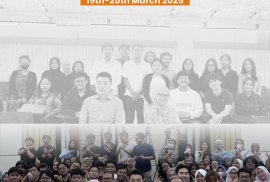
    The Center for Microeconomics Research and Dashboard successfully launched the first session of the Micro-Economica Talks (MET) Series, carrying the theme: “Just Transition & Climate Change: The Role of Social Protection and Impacts on Workers.”

    Held over two insightful days: Wednesday, 19 March 2025 and Thursday, 20 March 2025. This event brought together students, researchers, and practitioners to critically explore the intersection of energy transition, climate policy, and social protection. read more
    Monthly Issue Vol.2: Just Energy Transition in Indonesia’s Coal Sector

    Ekonomi PublikEkonomika KependudukanEkonomika KetenagakerjaanEkonomika TeknologiKajianMonthly Issue Kamis, 8 Mei 2025

    Author: Ahmad Zufar Robbani, Raniah Salsabila, Qisha Quarina

    May 2025

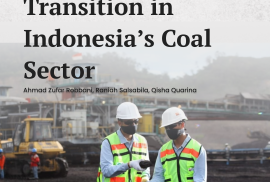
    Indonesia’s commitment to achieving net-zero emissions by 2060 or earlier places the coal sector at the heart of the nation’s energy transition. As one of the main contributors to national GDP, state revenue, and employment, phasing out coal is not just an environmental milestone—it’s a socioeconomic turning point. Our latest study reveals that while most coal workers belong to the highest wage deciles, many are still vulnerable due to fixed-term contracts that limit access to social protection. The transition is projected to cause widespread job losses across upstream and downstream industries, with regions like East Kalimantan and South Sumatra likely to face the greatest impact. read more

    Kajian Vol. 9: Labor & Technology Economics: Apakah Artificial Intelligence akan Sepenuhnya Mensubstitusi Manusia?

    Ekonomika KetenagakerjaanEkonomika TeknologiKajian Sabtu, 30 November 2024

    Penulis:

    Raniah Salsabila, Qisha Quarina

    Bidang Kajian Microeconomics Dashboard 2024


    Ringkasan Eksekutif

  • Kemajuan teknologi dianggap sebagai mesin kemajuan ekonomi, namun juga sebagai inovasi yang memengaruhi pengaturan pasar tenaga kerja. 
  • Kemajuan teknologi dinilai dapat mengurangi lapangan pekerjaan dan meningkatkan risiko pengangguran. Di sisi lain, kemajuan teknologi dapat meningkatkan produktivitas pekerja. 
  • Lebih lanjut, salah satu kemajuan teknologi yang paling banyak diadopsi di pasar tenaga kerja adalah Artificial Intelligence (AI). 
  • AI merupakan alat yang menggunakan metode komputasi untuk meniru kecerdasan manusia dan dapat digunakan untuk membantu manusia dalam menyelesaikan pekerjaan. 
  • Kemunculan AI dapat meningkatkan kecepatan dan volume pekerjaan serta meningkatkan otomatisasi proses industri sehingga dapat mengakibatkan perpindahan pekerjaan di beberapa sektor. 
  • Pada dasarnya teknologi buatan yang meniru kecerdasan manusia dibangun untuk membantu manusia dalam menyelesaikan pekerjaan, bukan untuk menggantikan kecerdasan manusia.
  • Dari 10 (sepuluh) kebutuhan keterampilan masa depan, hanya 2 (dua) keterampilan yang berkaitan dengan teknologi, sementara sebagian besar keterampilan yang dibutuhkan di masa depan berkaitan dengan kecerdasan manusia.
  • Dalam menjaga hubungan antara manusia dan AI diperlukan peningkatan keterampilan maupun reskilling untuk mengimbangi perkembangan AI.
  • read more

    Berita Terakhir

    • Kajian Vol.14: Agricultural Economics: The Moderation of Indonesia’s Agricultural Sector: Why Productivity and Growth Are Slowing Down?
    • Kajian Vol.13: Health Economics: Mengapa Gangguan Tidur Menjadi Masalah Baru dalam Ekonomi? Sleep Deficiency and Its Economic Burden
    • Kajian Vol.12: Labour Economics: Indonesia’s Young Labour Force: Trends and Challenges in Youth Unemployment
    • Edisi Khusus Policy Paper Kelas Ekonomika Pembangunan 1 Program Sarjana Population Economics: Analisis Efektivitas Kebijakan Insentif Kelahiran di Tengah Krisis Populasi Korea Selatan
    • Kajian Vol.11: Sports Economics: Exploring the Football Player Market in Indonesia’s Super League
    Universitas Gadjah Mada

    Bidang Kajian Microeconomics Dashboard
    Fakultas Ekonomika dan Bisnis
    Universitas Gadjah Mada
    Jln. Sosio Humaniora No.1, Bulaksumur, Yogyakarta, Indonesia 55281
    Phone: 081227556133 – Vika
    Email: microeconomics.feb@ugm.ac.id

    © Bidang Kajian Microeconomics Dashboard

    KEBIJAKAN PRIVASI/PRIVACY POLICY